Database Indexes
৫০০-পৃষ্ঠার বইয়ে index ছাড়া যা - DB-তে index ছাড়াও তা।
আপনার একটি ৫০০-পৃষ্ঠার বইয়ে "TCP" শব্দটি কোথায় আছে খুঁজতে হবে। বইয়ের শেষে index থাকলে - দেখলেন "TCP - pages 47, 142, 238"। সরাসরি যেতে পারলেন। Index না থাকলে - পৃষ্ঠা ১ থেকে শুরু করতে হতো। Database-এ index একই কাজ করে।
Index কী?
Database Index হলো একটি বিশেষ data structure (সাধারণত B-tree) যা table-এর কোনো column-এর মান সাজিয়ে রাখে - ফলে query খুব দ্রুত record খুঁজতে পারে।
Index ছাড়া DB full table scan করে - million row হলেও সব read করে।
কীভাবে কাজ করে?
একটা users table - million row। আপনি query করলেন:
- Without index: Million row scan করে - slow।
- With index on email: B-tree-তে log(N) lookup। ১M row-এ ২০ comparison।
Index-এর ধরন
১. B-Tree Index (Default)
Balanced tree - সবচেয়ে কমন। Range query (BETWEEN, >, <), ORDER BY-তে দ্রুত।
- সুবিধা: Equality + range - দুই-ই দ্রুত।
- ব্যবহার: ID, date, ordered column।
২. Hash Index
Hash function দিয়ে - শুধু equality (=)। Range কাজ করে না।
- সুবিধা: O(1) equality lookup।
- অসুবিধা: Range, sort নেই।
- ব্যবহার: Memcached, Redis, কিছু DB-তে memory table।
৩. Composite (Multi-column) Index
একাধিক column-এর উপর - order matters।
এই index ব্যবহার হবে:
- WHERE user_id = X - ✓
- WHERE user_id = X AND status = Y - ✓
- WHERE user_id = X AND status = Y AND created_at > ... - ✓
- WHERE status = Y (without user_id) - ✗ (left-most prefix nai)
৪. Unique Index
Index + uniqueness constraint। Email, username field-এ।
৫. Full-text Index
Text content search - MySQL FULLTEXT, PostgreSQL GIN।
৬. Partial Index
Subset of rows - যেমন WHERE deleted_at IS NULL। Storage saving।
৭. Covering Index
Query-এর সব column index-এ আছে - table-এ যেতে হয় না (index-only scan)।
কখন Index যোগ করবেন?
- WHERE clause-এ frequently appearing column।
- JOIN-এ ব্যবহৃত column (ON foo.id = bar.foo_id)।
- ORDER BY column।
- GROUP BY column।
- Foreign key column।
কখন Index যোগ করবেন না?
- Write-heavy table: প্রতিটি INSERT/UPDATE-এ index update - slow।
- Small table: Few thousand row-এ full scan ই দ্রুত।
- Low cardinality: Boolean (true/false) - index লাভ নেই।
- Frequently updated column: Index maintenance overhead।
- Rarely queried column: Storage খায় - কোনো লাভ নেই।
Index-এর Cost
- Storage: Index data structure disk-এ। Table size-এর ১০-৩০%।
- Write performance: Insert/Update/Delete-এ index-ও update। ৩-৫ index = write slow।
- Memory: Hot index buffer pool-এ থাকে।
- Maintenance: Periodic rebuild/reorganize।
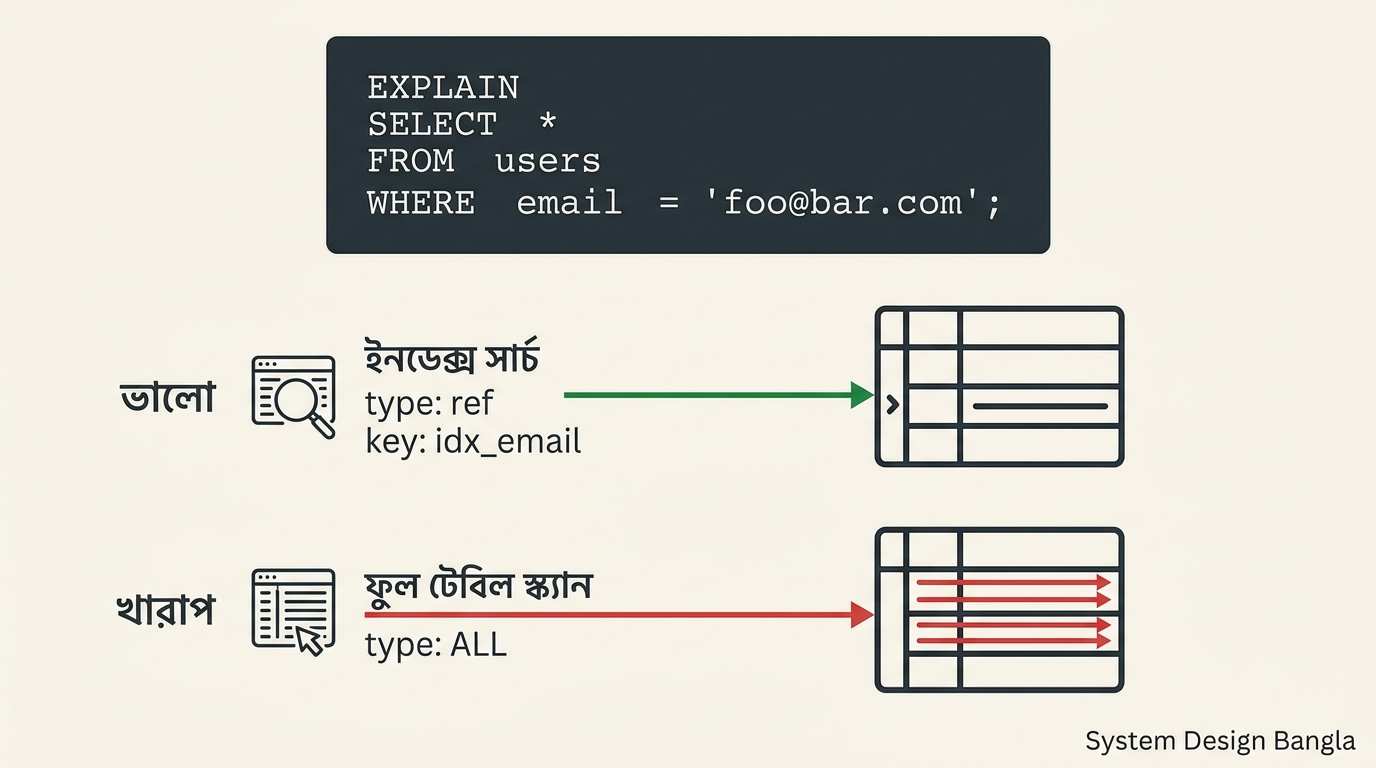
EXPLAIN - Index ব্যবহার দেখা
SQL query optimize করতে EXPLAIN command:
Clustered vs Non-Clustered Index
Clustered Index
- Table row-এর physical order index অনুযায়ী
- একটিই হতে পারে (primary key সাধারণত)
- Range query super fast
- InnoDB MySQL-এর default
Non-Clustered Index
- আলাদা structure → table row-এ pointer
- একাধিক হতে পারে
- Equality fast, range কিছুটা slow
- Secondary index
বাস্তব উদাহরণ
- E-commerce: Index on (user_id, status) - user-এর order quickly।
- Social media: Index on (user_id, created_at DESC) - timeline।
- Search: Full-text index on product description।
- Banking: Composite index (account_id, transaction_date)।
সাধারণ ভুল ধারণা
- "যত index তত fast": না - write slow, storage waste।
- "Index automatic": Primary key auto, কিন্তু অন্য column-এ explicit।
- "Index মানে query fast": Wrong index/usage হলে DB skip করে।
Best Practices
- Slow query log monitor - কোথায় index দরকার বুঝবেন।
- EXPLAIN দিয়ে query plan দেখুন।
- Composite index column order - selectivity high → low।
- Foreign key column-এ index দিন।
- Unused index drop করুন।
- Periodic ANALYZE - DB-কে statistics update দিতে।
📌 চ্যাপ্টার সারমর্ম
- Index = data structure দ্রুত search-এর জন্য।
- B-Tree default; Hash equality-only; Composite multi-column।
- Read fast করে কিন্তু write slow।
- Left-most prefix rule composite index-এ।
- EXPLAIN দিয়ে index usage check।